Star Plus at Full Volume: The Complicated Love Affair Desi Parents Have With Serials They Swear They Hate
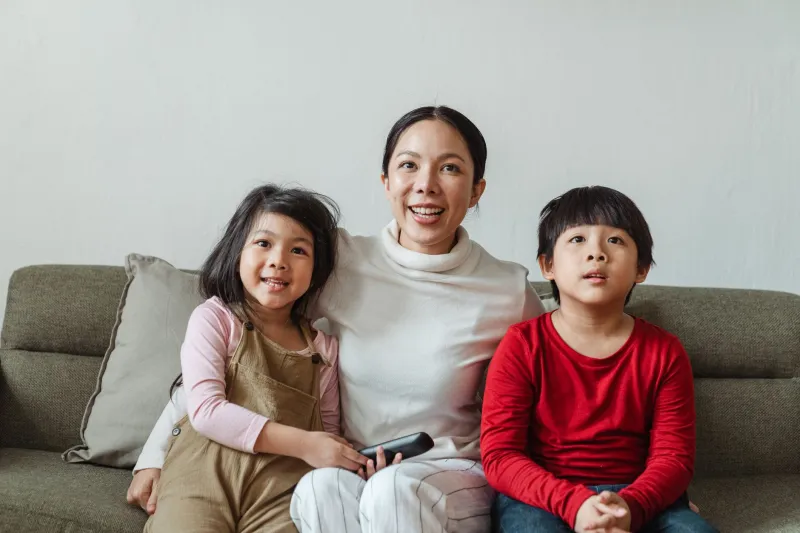
There's a specific kind of chaos that happens in South Asian households across America right around 8 PM. Dinner is winding down, someone's loading the dishwasher, and then — without fail — the living room television locks onto some Indian serial where a woman in a heavily embroidered saree is either crying, plotting revenge, or doing both simultaneously while dramatic violin music threatens to shatter the windows. Your mom settles in. Your dad pretends he's just passing through. Nobody changes the channel.
Ask your mom about it and she'll sigh. "These shows are so stupid," she'll say. Then she'll tell you exactly what happened in last Tuesday's episode, character motivations included.
This is not hypocrisy. This is not even irony. This is something far more interesting — and if you've grown up Desi in the US, you already know it intimately.
The Ritual Is the Point
Here's the thing about Indian serials that gets missed when Gen-Z is busy cringing from the other room: for a lot of South Asian immigrants, these shows aren't really about the plot. The plot is almost beside the point. What matters is the ritual of watching.
For parents who moved to the US in their 30s or 40s, who built entire lives in a country that didn't always make space for them, these serials are a nightly anchor to something familiar. The language, the family dynamics, the festivals, the food referenced in passing — it's a portal. Not to India exactly, but to a version of home that still makes sense to them.
Dr. Priya Mehta, a cultural psychologist based in the Bay Area who works with South Asian immigrant families, describes it this way: "There's a concept of 'cultural maintenance' that's really important for first-generation immigrants. Media in your mother tongue, even when it's melodramatic or unrealistic, serves a psychological function. It keeps you tethered to an identity that can feel fragile when you're living in between two cultures."
In other words: your mom isn't watching Anupamaa because she thinks it's prestige television. She's watching it because it makes her feel less far from home.
Streaming Changed Everything (And Also Nothing)
For years, watching Indian serials in America required a whole setup — a specific cable package, a satellite dish, maybe a cousin who knew how to get a particular channel. It was effort. Now, with Zee5, Disney+ Hotstar, SonyLIV, and a dozen other platforms available on any phone or smart TV, the friction is completely gone.
This has done something fascinating to consumption patterns. Older Desi adults who might have watched one show casually now have access to entire libraries. Aunties who used to call each other to catch up on missed episodes now binge on their iPads at midnight. WhatsApp groups dedicated entirely to serial episode recaps are reportedly thriving. (If you're not in one of these groups, your parents probably are.)
Streaming has also introduced something unexpected: new fans. Second-generation Desis who grew up rolling their eyes at these shows have, in some cases, started watching them — partly out of curiosity, partly out of a desire to connect with their parents, and partly because the algorithm is relentless and eventually you just give in.
The comment sections on YouTube uploads of popular serial clips tell the whole story. You'll find aunties in New Jersey debating character arcs, uncles defending their favorite villains, and occasionally a 24-year-old from Houston admitting they got invested somewhere around episode 200.
The Cringe Is Generational, But So Is the Comfort
Let's be honest about the cringe. Indian serials have a very specific visual and narrative language that is, by most objective measures, extremely extra. The slow-motion reaction shots. The same dramatic music cue used approximately 47 times per episode. The plotlines involving evil mothers-in-law, secret twins, and characters who come back from the dead with new faces. The fact that some of these shows have been running for over a decade without a clear ending in sight.
For Desi Gen-Z raised on Netflix originals and prestige cable, it can feel like a lot. There's a generational gap in media literacy that makes it hard to sit through an episode without making a comment.
But here's where it gets complicated: a lot of the things Gen-Z finds cringey are actually the same things their parents find comforting. The predictability. The familiarity of the conflicts. The way the shows center family — messy, loud, imperfect, impossible-to-escape family — in a way that feels true even when the storytelling is overwrought. These aren't bugs. They're features, just ones that land differently depending on where you're standing.
There's also something worth acknowledging about the community these shows create. Desi women in particular — many of whom navigated immigration, career pivots, and raising kids in a culture that wasn't built for them — have built genuine social ecosystems around these serials. The show is the conversation starter. The shared reference. The thing you talk about with the aunties at the temple or the Diwali potluck.
The Criticism Is Real, Too
None of this means the criticism gets a pass. Indian serials have a well-documented problem with regressive gender dynamics, colorism, and storylines that romanticize toxic relationships or portray women as defined entirely by their roles within a family. These are legitimate issues, and progressive Desi voices — including a lot of younger South Asian Americans — have been calling them out loudly.
Some parents push back on this criticism. Others, honestly, agree with it but keep watching anyway. Which is its own kind of complicated relationship with media — something that basically every American has with some piece of content they consume. We watch things we know are problematic. We love things that don't fully represent our values. The difference is that when Desi parents do it, it tends to become a family argument.
What Happens When You Actually Sit Down and Watch
Here's a quiet truth that a surprising number of second-generation Desis will admit if you catch them in the right mood: sitting down and watching one of these serials with their parents — just once, without the phone, without the commentary — is a different experience than watching alone.
Something shifts. You start to see what your mom sees. Not necessarily the show itself, but her watching it. The way she knows every character's backstory. The way she laughs at specific moments. The way she explains plot context with the kind of detailed enthusiasm she never applies to, say, your career updates.
That's not nothing. That's actually kind of everything.
The Desi parent serial obsession is, at its core, a story about belonging. About the ways immigrants hold onto culture in small, daily, sometimes silly ways. About how community gets built in living rooms thousands of miles from where you started. About how a show you'd never put on your own watch list can still be worth understanding.
Your mom knows the show is dramatic. She's not watching it because she thinks it's realistic. She's watching it because for an hour, she's not navigating American bureaucracy or missing her sisters or worrying about whether she's losing her accent. She's just home.
Turn down the cringe. Turn up the volume. Sit with her for one episode. You might surprise yourself.