Who Owns the Recipe? The Generational Argument Tearing Apart the Desi Dinner Table
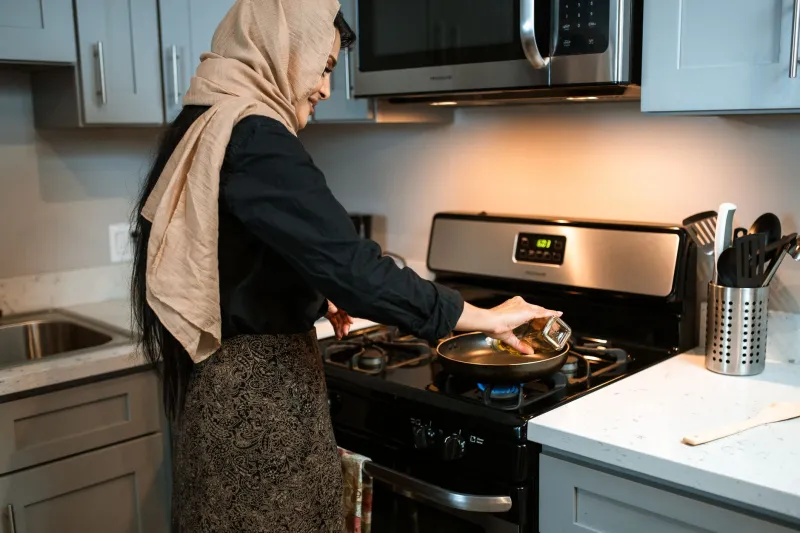
Priya Sharma's mom has been making the same aloo gobi since 1987. Same cast iron karahi. Same ratio of cumin to coriander she memorized from her own mother back in Ludhiana. When Priya posted a version of it on her food TikTok last spring — roasted instead of sautéed, finished with a lemon-tahini drizzle — her mom called her within the hour.
"She didn't yell," Priya, 26, laughs from her apartment in Chicago. "She just got very quiet and said, 'That's not aloo gobi.' And honestly? I couldn't even argue."
This scene — some version of it — is playing out in South Asian households across the US every single week. The tension isn't really about potatoes and cauliflower. It's about something older and more complicated: who gets to define what's real, what's ours, and what happens to a cuisine when it travels across oceans and generations.
The Word Nobody Can Actually Define
Here's the thing about "authentic" — nobody can agree on what it means, and that's kind of the whole problem.
Ask a first-generation immigrant parent and they'll point to geography. Authentic Punjabi food tastes like Punjab. Authentic Tamil food is what their paati made in Chennai, full stop. The recipe is the memory. Changing it feels like erasure.
Ask their American-raised kids and you'll get a completely different answer — or a shrug. "I grew up eating my mom's version AND Chipotle," says Rohan Mehta, a 23-year-old home cook in New Jersey who runs a small food Instagram. "My palate is genuinely different from hers. Why would I pretend it isn't?"
Food historians will tell you that "authenticity" in South Asian cooking has always been a moving target anyway. The tomato? Not native to the subcontinent. The chili pepper? Brought over by the Portuguese. Dal makhani as most people know it was essentially perfected at a Delhi restaurant in the 1950s. Every "traditional" dish has a before. The difference now is that the remixing is happening faster, more visibly, and with an audience of thousands watching.
TikTok Changed the Kitchen
Social media didn't create this generational split — but it absolutely poured accelerant on it.
Desi food creators are one of the most rapidly growing niches on TikTok and Instagram right now, and a huge chunk of their content lives in this exact tension. Fusion recipes, "elevated" takes on classics, South Asian ingredients showing up in entirely non-South Asian contexts. Cardamom in a cold brew. Chaat masala on popcorn. A saag-inspired pasta that gets 800,000 views and a comment section that reads like a UN peacekeeping crisis.
"The comments split really clearly," says Anika Kapoor, a food creator based in Houston with about 180,000 followers. "Half the people are like, 'omg this is genius, I'm making this tonight.' The other half are like, 'your ancestors are crying.' And it's always the second group that's most intense about it."
What's interesting is that the pushback rarely comes from people in South Asia itself. It tends to come from first-generation diaspora parents — people who left home and, in some ways, preserved a version of their culture in amber. Meanwhile, back in Mumbai or Lahore or Colombo, food culture is evolving constantly. Street food vendors are experimenting. Restaurants are doing fusion. The "authentic" version these parents are defending is sometimes a snapshot of a place that has itself moved on.
The Preservation Argument Isn't Wrong, Though
It would be easy — and a little cheap — to just side with the younger generation here and call it a day. But the preservation instinct comes from somewhere real, and it deserves more than a dismissive eye-roll.
For a lot of immigrant parents, the kitchen was the one place where they could be fully themselves in a country that constantly asked them to assimilate. The smell of tadka hitting hot oil wasn't just dinner prep — it was identity maintenance. Passing down a recipe exactly as learned was an act of cultural survival, not rigidity.
"My mother-in-law taught me her biryani recipe the way you'd teach someone a sacred text," says Fatima Raza, 54, who moved from Karachi to Dallas in the early 1990s. "Every step mattered. The way you layer it. The dum time. She wasn't being controlling — she was giving me something irreplaceable."
That weight is real. And when a kid comes along and tosses that recipe into a blender with whatever's trending on social media, it can feel like the thread snapping.
So What's the Actual Answer?
There probably isn't a clean one, which is maybe the most honest thing to say.
The chefs and food writers who've thought hardest about this tend to land somewhere in the middle — which sounds boring until you hear how they actually articulate it. The argument isn't preservation versus evolution. It's about whether you know what you're evolving from.
"You can do whatever you want with a dish," says chef Vikram Nair, who runs a modern South Asian restaurant in Los Angeles. "But you should know the original first. You should understand why the spices are layered the way they are, why a dish exists, what it means to the people it came from. Then you can play with it. That's not fusion — that's fluency."
That framing — fluency over purity — is starting to resonate with a lot of younger Desi cooks. Priya, back in Chicago, has started doing something she calls "homework sessions" before she remixes a dish. She calls her mom. She asks questions. She learns the original before she riffs on it.
"And honestly," she says, "my versions got better. Because I actually understand what I'm working with now."
Her mom still thinks the tahini drizzle is unnecessary. But she watched the TikTok three times.
The Table Is Big Enough
Here's the Banthoda take: this argument isn't going away, and maybe it shouldn't. The tension between holding onto where you came from and building something new in the place you actually live — that's not a problem to be solved. That's just the Desi diaspora experience, playing out one recipe at a time.
The aloo gobi your nani made in a village kitchen in 1972 is real. The aloo gobi taco your cousin made for her Austin dinner party last weekend is also real. Both of them can exist. Both of them can matter.
The dinner table has always been where families fight and make up and figure out who they are. Why would the food on it be any different?