Same Song, Two Worlds: How Desi Families Are Hearing Music That Doesn't Even Sound the Same Anymore
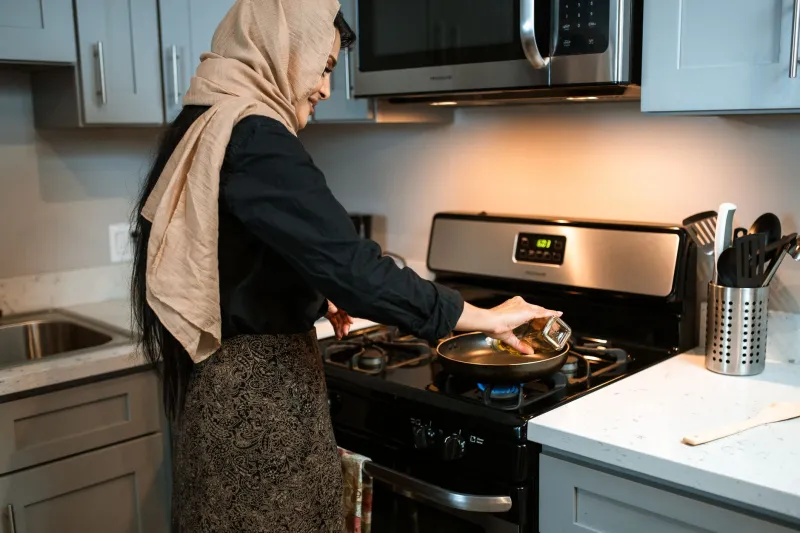
Let's set the scene. You're in the kitchen, AirPods in, nodding along to a slowed-and-reverbed version of a '90s Bollywood ballad that some bedroom producer from New Jersey turned into something that genuinely sounds like floating. Your mom walks in, catches maybe four seconds of it, and immediately goes, "What did they do to that song?" — not curious, not impressed. Offended. Personally.
This is not a small moment. This is the entire generational divide in South Asian music, happening in real time, over leftover dal.
The truth is, Desi parents and their kids aren't just listening to different music anymore. They're listening to completely different versions of the same music — and that distinction matters more than most people want to admit.
The Remix Is the Message
Here's what's wild: the songs themselves haven't disappeared. "Tum Hi Ho" is still "Tum Hi Ho." Lata Mangeshkar's voice hasn't been erased from the internet. But what Gen-Z and younger millennials in the diaspora are doing with those songs? That's a whole separate conversation.
Scroll through TikTok for ten minutes and you'll find Carnatic compositions chopped into 30-second loops under POV videos. You'll find Punjabi folk melodies stretched out over trap beats. You'll find a 1970s Hindi film song that's been pitch-shifted down two octaves and layered under lo-fi rain sounds — with 4 million plays. The original artists are often uncredited. The context is completely stripped. And somehow, it hits.
For a lot of young Desi Americans, this is how they discovered South Asian music in the first place. Not through their parents sitting them down with a Lata cassette, but through a 22-year-old producer in Queens who made something feel new without asking anyone's permission.
Gatekeeping in Surround Sound
And that's exactly where things get complicated.
There's a very loud conversation happening in South Asian cultural spaces right now about authenticity — about who gets to touch classical music, who's allowed to remix a ghazal, and whether a viral TikTok sound counts as cultural appreciation or cultural reduction. The older generation tends to land firmly in the latter camp. If you didn't study the raag, if you don't know the taal, if you're just vibing — you don't get to claim it.
But Gen-Z, particularly in the diaspora, is pushing back hard. And honestly? They have a point worth hearing.
For a lot of second-generation South Asians in the US, classical music wasn't handed down gently. It was either weaponized as proof of cultural purity ("You don't know your own heritage") or completely absent from their American upbringing. Finding a raga remix on Spotify at 17 might be the first time that music felt like something that belonged to them too — not as homework, but as feeling.
That's not disrespect. That's a door finally opening.
The Indie Producers Changing Everything
Meanwhile, a whole wave of South Asian indie artists and producers are operating in a space that genuinely doesn't have a name yet. They're not making Bollywood music. They're not making Western pop. They're building something in between — and their parents have absolutely no framework for it.
Artists like Priya Ragu, Arushi Jain, and Anoushka Shankar (who has been doing this boundary-pushing work for decades, honestly) are creating music that draws deeply from South Asian traditions while refusing to be boxed in by them. Priya Ragu's Tamil-infused R&B doesn't sound like anything your chitthi would recognize, but the feeling in it? Completely South Asian. The longing, the drama, the weight of family and diaspora and belonging — it's all there.
The disconnect is that parents often need the sonic signifier. They need to hear the sitar, the tabla, the specific melodic patterns they grew up with. When those markers are absent or transformed beyond recognition, the music doesn't register as "ours." But for younger listeners, the identity is in the intention, not the instrumentation.
When Grandma Finds the Dance Trend
Then there's the TikTok problem — and it is both hilarious and genuinely worth examining.
Earlier this year, a snippet of a classical composition went massively viral as a dance trend sound. Millions of videos. Huge engagement. Total chaos in South Asian group chats. Because on one hand, a classical Indian composition reaching that kind of mainstream Western audience is objectively kind of incredible. On the other hand, when it's soundtracking a thirst trap or a "get ready with me" video, the cultural weight of that music evaporates completely.
Nobody is necessarily doing anything wrong here. But something is definitely being lost in translation — and the question of whether that's okay is one South Asian communities in the US are still actively arguing about, usually in the comments section.
The Playlist at the Party
Here's where it gets personal for a lot of us. The Desi house party, the wedding after-party, the cousin's graduation dinner — these are the spaces where the playlist becomes a negotiation. Someone's auntie wants classic Kishore Kumar. The cousins want the new Diljit Dosanjh. The Gen-Z contingent has already connected their phone and is playing something that sounds like a Punjabi folk melody filtered through a hyperpop lens.
Nobody is happy. Everybody is also kind of happy. This is the nature of music as a living thing.
What's actually happening at those parties is a microcosm of something much bigger: South Asian musical identity in America is not one thing. It never was, really, but the internet has made the fractures visible in a way that's impossible to ignore. Your parents' version of Desi music and your version exist in parallel, sometimes intersecting, often not — and both are legitimate.
So Who Gets to Define the Sound?
The honest answer is: nobody, and everybody.
South Asian music in the diaspora is in this genuinely exciting, genuinely messy moment where it's being pulled in a dozen directions simultaneously. Classical purists are holding the line. Bedroom producers are blowing it up. Indie artists are rebuilding it from scratch. TikTok is doing whatever TikTok does.
And somewhere in the middle of all of that, a Desi kid in suburban Atlanta is hearing a slowed Bollywood remix for the first time and feeling something they don't have words for yet — something that connects them to a culture they've been navigating from a distance their whole life.
That feeling is worth protecting, even when the format is unrecognizable.
Even when grandma will never understand the dance trend. Especially then.