Your Kid's Playlist Is Not Noise — It's a Whole Conversation You're Missing
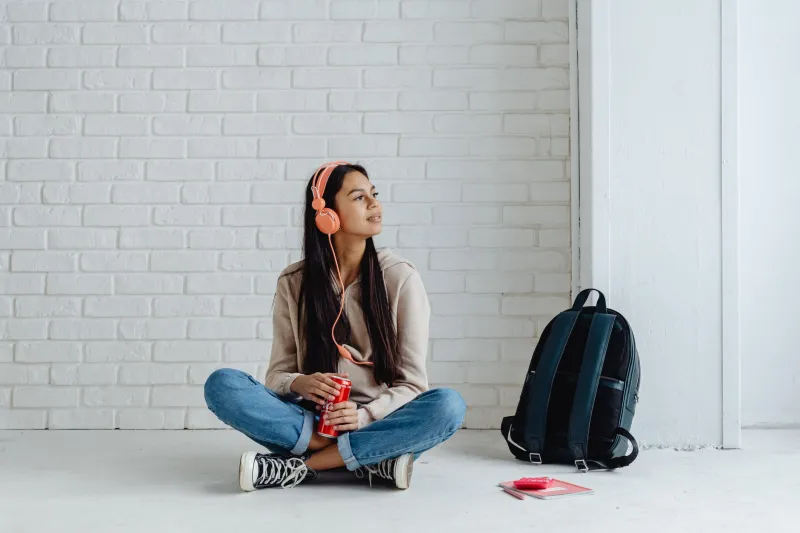
Let's set the scene. You're in the car. Your seventeen-year-old plugs in their phone, and suddenly something that sounds like a broken modem having an existential crisis is coming out of your speakers at full volume. You reach for the dial. They grab your wrist. "Amma, just listen for a second."
You don't. The dial turns. The silence is thick.
This moment — small, mundane, kind of funny in retrospect — happens in Desi households across America every single day. And every single time it does, a tiny thread between parent and kid quietly snaps. Not dramatically. Not in a way anyone notices right away. But it adds up.
Here's the thing: the music your kid is obsessed with isn't random noise. It's a whole world. And you don't have to love it to understand it. You just have to be willing to try.
The Gap Is Real, But It's Not New
Every generation of Desi parents has had this fight. Your parents thought film songs from the 70s were the only real music. You probably snuck cassettes of Daler Mehndi or early Indi-pop under your bed. And now here you are, the confused one, staring at a Spotify Wrapped that looks like a foreign language.
But here's what's different now: the gap is wider and moving faster. Gen-Z kids aren't just listening to one genre. They're hopping between UK drill, hyperpop, Afrobeats, bedroom pop, and whatever SZA dropped last Thursday — sometimes all in a single afternoon. The algorithm serves them a buffet, and they eat everything.
For Desi parents who grew up with a much more linear relationship to music — you liked what was popular in your hometown, your era, your language — this can feel genuinely disorienting. That's fair. But disorienting doesn't mean bad.
So What Are They Actually Listening To?
Let's break down some of the genres that are probably living in your kid's headphones right now.
Drill rap — originally out of Chicago, then London, now everywhere — is raw, minimal, and lyrically dense. It's not background music. It's confrontational by design. If it sounds aggressive to you, that's intentional. It's music made to articulate frustration, survival, and street-level reality. Your kid might not live that life, but they're drawn to the honesty of it.
Hyperpop is the broken modem in the car scenario. It's maximalist, chaotic, and deliberately weird — think pitched-up vocals, distorted 808s, and production that sounds like a video game glitching out. Artists like 100 gecs and Charli XCX built a whole universe here. For a lot of queer and neurodivergent young people especially, hyperpop feels like the first genre that wasn't made to sound "normal."
Afrobeats and Afropop — Burna Boy, Wizkid, Tyla — have exploded into mainstream American culture and your kid is absolutely on board. Interestingly, this is one place where Desi parents sometimes connect faster, because the rhythmic sensibility isn't entirely foreign. Bhangra and Afrobeats have more in common than you'd think.
Lo-fi and bedroom pop are the chill side of the spectrum — soft, hazy, and built for late-night studying or early-morning walks. This one might actually be your entry point.
What Desi Musicians Who Live in Both Worlds Are Saying
Young South Asian artists in the US are literally building bridges between these sonic universes, and they have thoughts.
Producers working in the Desi-American space — kids who grew up hearing their parents' Kishore Kumar records and then discovered Travis Scott in middle school — talk about this tension constantly. The experience of holding two musical identities at once, of being fluent in both and having neither side fully claim you, is something a lot of second-gen Desi musicians have turned into their whole artistic identity.
Singers and beatmakers in cities like Houston, Toronto, and the Bay Area are blending Punjabi folk melodies with trap hi-hats, or layering sitar samples over hyperpop production, creating something that sounds like nothing that came before it. And when they describe what they want from their parents, it's almost always the same thing: not approval, just curiosity. "I don't need my dad to love it," one young producer put it. "I just want him to ask me one question about it."
One question. That's the whole ask.
A Framework for Listening Without Losing Your Mind
Okay, practical stuff. Here's how to actually do this without faking enthusiasm you don't feel.
Ask before you react. Next time your kid plays you something, resist the urge to make a face. Ask one question: "What do you like about this?" Not "what is this?" or "why does it sound like that?" — just what do you like about it. You're not asking for a music lesson. You're asking about your kid.
Let them be the expert. Your kid knows things you don't. That's okay. Let them explain. Ask them to make you a short playlist — five songs — of things they think you might actually tolerate. Give it a real listen. Not in the background. Actually listen.
Find the thread. Almost every genre your kid loves has a Desi cousin somewhere. Drill's rhythmic pocket has something in common with certain tabla patterns. Hyperpop's maximalism isn't far from the chaos of a Bollywood item number. Afrobeats and bhangra share more DNA than either community usually admits. Find the thread and pull on it.
Don't perform interest you don't have. Kids can smell fake from a mile away. You don't have to pretend you love drill rap. But you can genuinely try to understand why it exists and what it means to the people who make it. That's different from pretending to vibe.
Why This Actually Matters
This isn't just about music. Music is just the door.
When a Desi parent dismisses what their kid is listening to, the kid hears something broader: my taste doesn't matter here, my world doesn't matter here. And when that happens enough times, kids stop sharing. They put in one earbud. They curate a version of themselves for home consumption and keep the real one tucked away.
And then parents wonder why their kids don't talk to them.
The musical landscape your Gen-Z kid lives in is genuinely complex and fascinating. It's also, if you pay attention, full of clues about who they are, what they're feeling, and what they're trying to work out. That's not noise. That's your kid, talking.
You just have to be willing to listen.
Even for one song. Even if it sounds like a broken modem.
Especially then.