Love You, But On My Terms: How Desi Kids Are Renegotiating Family Without Burning It Down
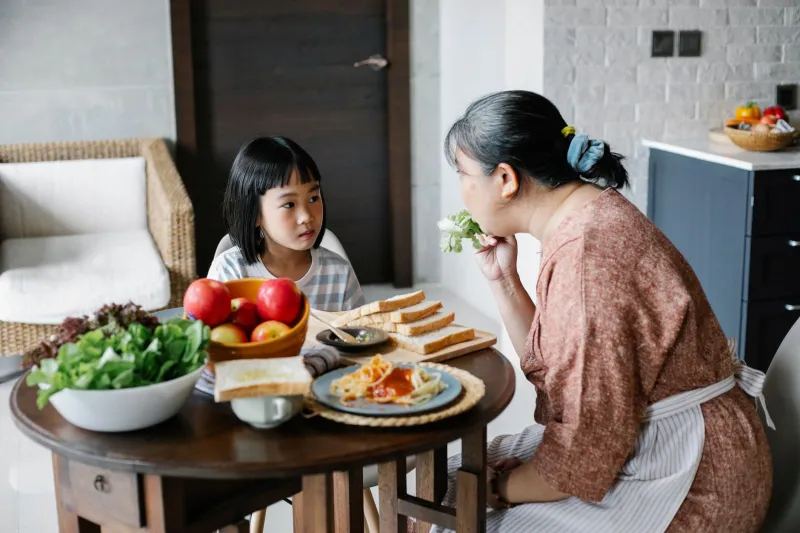
There's a specific kind of exhaustion that hits when you're sitting across from your mom at the dinner table, trying to explain what a boundary is, and she looks at you like you just told her you're joining a cult.
"Boundary? What boundary? I am your mother."
And there it is. The sentence that ends a thousand conversations before they begin.
For a huge chunk of second-gen South Asians in the US, this is not a hypothetical. It's a Tuesday. And increasingly, it's also the thing they're paying a therapist $180 an hour to unpack.
The Setup Nobody Warned You About
Here's the thing about growing up desi in America: you get handed two entirely incompatible instruction manuals for how to be a person. One comes from your parents — rooted in collective identity, sacrifice, and the kind of loyalty that doesn't ask questions. The other comes from literally everywhere else — school, friends, every coming-of-age movie you watched — telling you that autonomy is a right, not a reward.
For a while, a lot of us just... compartmentalized. Home brain, school brain. Desi mode, American mode. It worked okay until it didn't.
What's changed recently is that more and more diaspora kids aren't just venting to their friends about this stuff. They're going to therapy, reading about family systems, and coming home with language their parents have never encountered. Words like enmeshment. Emotional labor. Conditional love. And the reaction from the aunties and uncles of the world has been... predictably not great.
When "Respect" Becomes a One-Way Street
Let's be honest about what's actually at the center of this clash. It's not really about whether you call home enough or whether you're dating someone your parents approve of. It's about power — specifically, who gets to define the terms of the relationship.
In a lot of South Asian households, respect flows in one direction. You give it upward. Elders receive it. That's the structure. And within that structure, questioning a parent's decision isn't framed as healthy communication — it's framed as disrespect. Full stop.
The problem is that many of these same parents also genuinely believe they are acting out of love. And honestly? A lot of them are. The sacrifices are real. The immigration stories are brutal. The intentions, more often than not, are good.
But good intentions and healthy dynamics are not the same thing, and that distinction is where the real friction lives.
Therapists who work with South Asian clients in the US talk about this constantly. The pattern tends to look something like this: a parent expresses love through control, a child experiences that control as suffocating, the child tries to create distance or push back, and the parent experiences that as abandonment or ingratitude. Nobody's lying. Everybody's hurt. And the cycle just keeps going.
What "Boundaries" Actually Means (And What It Doesn't)
Part of the problem is that "boundaries" has become a word that means completely different things depending on who's using it.
For a lot of desi parents, the word lands as a threat. Like their kid is building a wall. Like they're being told they don't matter. And to be fair, the way boundaries sometimes get introduced — via a twenty-three-year-old who just finished their first therapy session and is ready to have The Talk — doesn't always help.
But what most people in this conversation are actually asking for isn't a wall. It's a door. One that locks from the inside sometimes. One that they get to open.
The difference between "I don't want to talk about this" as a shutdown and "I need some space to make this decision on my own" as a request — that gap is enormous. And navigating it requires a kind of emotional vocabulary that a lot of desi families are only just starting to develop.
Some are getting there. Slowly, awkwardly, with a lot of wrong turns.
The Middle Ground Nobody Talks About
Here's what the discourse around desi family dynamics often misses: most second-gen South Asians aren't trying to blow up their families. They're not choosing individualism over community. They're not rejecting their culture.
They're trying to stay in the relationship while also surviving it.
That looks different for everyone. For some, it's having a direct conversation — the kind that would've been unthinkable a generation ago. For others, it's quieter: making decisions independently without announcing them, letting certain comments slide, picking battles with surgical precision.
And yeah, for some people it does mean distance. Not out of spite, but out of necessity. When the cost of closeness is your mental health, sometimes you have to step back to stay intact.
What's interesting is that some parents — not all, but some — are starting to come around. Not because they've read the same books or gone to therapy themselves, but because they can see their kids pulling away and they don't want to lose them. The negotiation isn't always verbal. Sometimes it's just... both sides quietly adjusting, without ever naming what's happening.
Is This Cultural Wisdom or Just Control?
This is the question that makes everyone uncomfortable, so let's just sit in it for a second.
There is something worth preserving in the South Asian emphasis on family as a unit. The idea that you don't just look out for yourself, that elders deserve care and consideration, that relationships require sustained effort — these aren't bad values. In a culture that can feel pretty isolating and transactional, the desi approach to family can be genuinely beautiful.
But beauty and harm can coexist. And the version of family loyalty that requires you to silence yourself, suppress your needs, or accept treatment you'd never accept from anyone else — that's not wisdom. That's just old pain getting passed down.
The kids who are pushing back aren't rejecting their families. They're trying to make them better. Trying to build something that can actually last because it's built on something real, not just obligation.
Where This Goes From Here
There's no clean ending to this story. Families are complicated. Culture is complicated. Love is complicated.
But something is shifting. You can feel it in the DMs people send each other after posting something vulnerable. You can hear it in the way desi podcasters and creators are talking about their parents — with love and frustration and nuance all at once. You can see it in the therapy waiting rooms filling up with brown faces who are finally deciding their inner lives are worth taking seriously.
The desi parent paradox — love that sometimes looks like control, sacrifice that sometimes comes with strings — isn't going to resolve itself overnight. But the fact that we're naming it, arguing about it, writing about it?
That's not disrespect.
That's the relationship doing the work it needed to do all along.