No TikTok in This House — Now Pass Me My Phone So I Can Watch This Reel
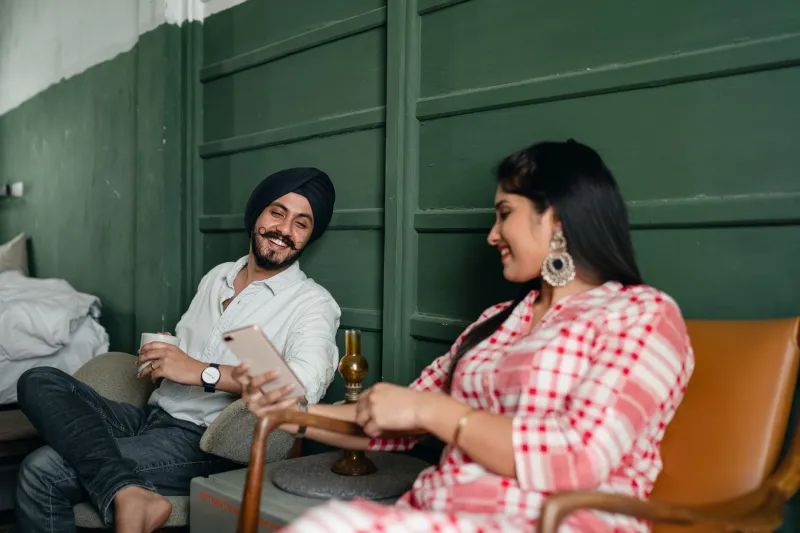
It starts with a lecture. You're sitting at the dinner table, maybe picking at some sabzi you didn't ask for, and your dad clears his throat with the energy of a man about to deliver a TED Talk. "These kids and their TikTok," he begins. "It's Chinese spyware. It rots the brain. No good can come from it."
You nod. You've heard this before. You know better than to argue.
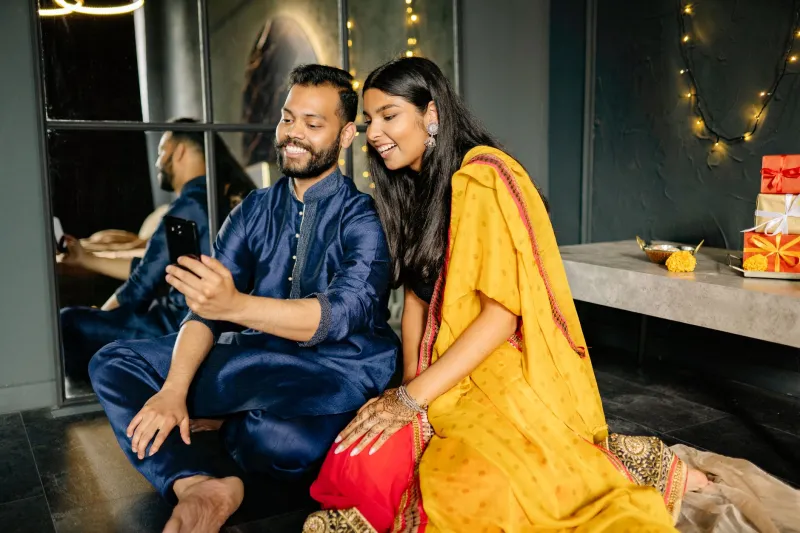
Then, two hours later, you walk past the living room and catch your mom — the same woman who once confiscated your iPad for a week because you spent too long on YouTube — absolutely cackle-laughing at a Reel of a desi aunty trying to use a stand mixer for the first time. Her phone screen is at full brightness. The volume is cranked up. She's watched it at least three times.
Welcome to the Desi Parent Paradox. Pull up a chair. There's a lot to unpack here.
The TikTok Boogeyman vs. The Instagram Loophole
Let's be real: when South Asian parents started their anti-TikTok crusade, a lot of it was genuine. The app's ties to Chinese ownership, the data privacy debates, the congressional hearings — these were real conversations, and it's not like desi parents invented the concern. But somewhere along the way, the specific anxiety about TikTok morphed into a broader moral panic about what their kids were watching rather than the technology itself.
Because here's the thing — TikTok and Instagram Reels are functionally the same product. Short-form vertical video, algorithm-driven feeds, infinite scroll, the whole nine yards. Meta literally built Reels as a direct response to TikTok's rise. If the concern was truly about screen time or data security, both platforms would be equally suspect.
But in desi households, TikTok became a symbol. It was the app the kids used. The one with the Gen-Z dances, the thirst traps, the audios that made absolutely no sense to anyone over forty. It became shorthand for the culture I don't understand and therefore cannot control.
Instagram, meanwhile, felt familiar. It had photos. It had recipes. It had relatives posting wedding pictures. It felt — and this is the key word — manageable.
What They're Actually Watching (And It's Sending Them)
Here's where it gets genuinely funny. Ask any second-gen desi in America about their parents' Reels habits and you'll get variations of the same story. Moms deep in cooking content — specifically the kind where someone makes a "desi-inspired" dish that would cause a minor family scandal if served at an actual family dinner. Dads forwarding motivational clips with dramatic background music that somehow always features a sunset. And then the crossover content: the Reels that start as something wholesome and end with everyone screaming.
A friend of mine — let's call her Priya, because she asked me not to use her name and also because there are approximately forty-seven Priyas in every desi friend group — told me her mother has an entire saved collection of Reels featuring desi mothers-in-law being "put in their place." This is a woman who, by her own telling, has never once admitted to being wrong in forty years of marriage. She watches these videos with the focused intensity of someone studying for an exam.
The algorithm, it turns out, does not care about your moral framework. It just feeds you what you engage with. And desi parents engage hard.
The Control Variable
So what's really going on here? Why the double standard?
Part of it is generational, obviously. The idea that technology you discover yourself is somehow more trustworthy than technology your kids introduce you to is a universal human quirk, not a desi-specific one. But in South Asian households, there's an added layer: the deep, complicated need to be the authority in the room.
For a generation of parents who immigrated to the US and built their identities around being the knowledgeable ones — the ones who figured out a new country, a new language, a new system — the idea that their children might be more fluent in any cultural landscape is genuinely threatening. TikTok wasn't just an app. It was evidence of a world they didn't have the map for.
Banning it was a way of redrawing the boundary. I don't understand this, therefore it's bad. I understand Instagram, therefore it's fine. The logic is circular, but the emotional need underneath it is real.
The Authenticity Question Nobody's Asking Out Loud
There's also something deeper here about what counts as "real" South Asian culture in the digital age. A lot of desi parents' Reels consumption skews toward content that feels culturally familiar — Indian cooking tutorials, Bollywood nostalgia clips, funny aunty videos, religious content. It's the algorithm serving them a version of home.
Meanwhile, the TikTok content they were objecting to — the stuff their kids were making and watching — often involved desi identity in ways that felt unfamiliar. Second-gen creators talking about therapy. Brown girls dancing to music that wasn't filmi. Desi guys being openly emotional. Content that said we are from here AND from there, and we're figuring out what that means on our own terms.
The ban, in some ways, was never really about the app. It was about which version of desi identity gets to take up space.
Okay But Also It's Just Really Funny
We can hold all of that nuance and still acknowledge that the image of your uncle — who delivered a fifteen-minute speech about the dangers of social media at your cousin's graduation party — getting absolutely wrecked by the algorithm at 11pm on a Tuesday is objectively hilarious.
The Desi Parent Paradox isn't unique. Every generation has its version of "do as I say, not as I do." But there's something particularly rich about watching it play out in real time, on platforms that are designed to make hypocrisy invisible by making everything feel personal and private.
Your mom isn't on TikTok. She would never. She's just on Instagram. Watching the exact same video that went viral on TikTok three days ago, which someone reposted to Reels, which the algorithm then served directly to her because she watched the last fourteen videos in that series.
Technology, much like a nosy relative, finds a way.
The Unsaid Conversation Worth Having
Here's the thing we don't say enough: the contradiction is actually an opening. If your parents are consuming social media content — even through what they consider the "acceptable" door — they're more plugged into the digital world than they'd like to admit. That's a bridge, not a wall.
The next time your dad starts in on the TikTok speech, maybe don't argue the data privacy angle. Just ask him what he's been watching lately. There's a good chance he'll show you something genuinely funny. And there's an even better chance it originally came from TikTok.
You don't have to tell him that part.