Forget the Ethnic Aisle: Desi Americans Are Going Straight to the Source
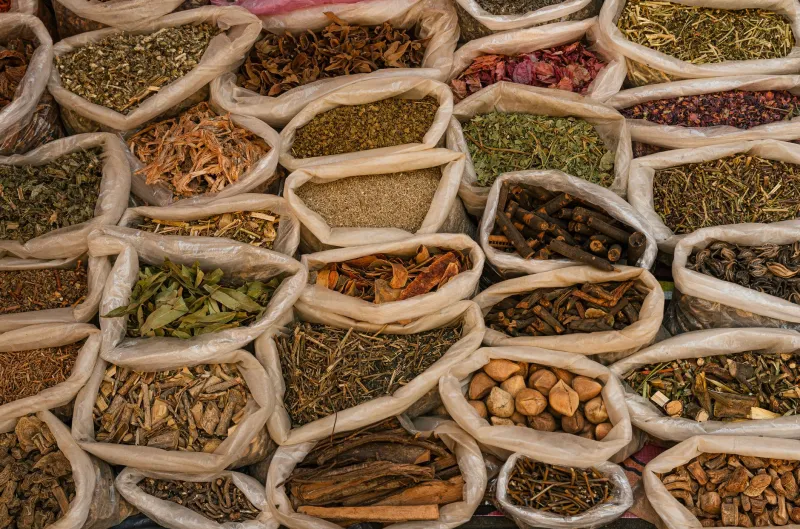
There's a specific kind of disappointment that hits when you open a jar of store-bought chaat masala and it smells like... nothing. Not wrong, exactly. Just absent. Like someone described the spice to a chemist who had never actually eaten chaat in their life.
For a lot of Desi Americans, that moment — the flat smell, the muted color, the flavor that gets you 70% of the way there and then just stops — has become the breaking point. And instead of settling, they're doing something about it.
They're building their own supply chains.
The Problem With the Ethnic Aisle
Let's be honest: the ethnic aisle at your average American grocery store was never really built for us. It was built for a store buyer who wanted to check a box. The selection is thin, the turnover is slow, and the prices somehow manage to be both expensive and disappointing at the same time.
Even the dedicated South Asian grocery stores — the ones that smell like mustard seeds and old cardboard and feel like a little piece of home — aren't immune to the problem. Ingredients travel long distances, sit in warehouses, and by the time that bag of dried red chilies reaches the shelf, it's already lost something. The oils have faded. The volatile compounds that make a spice actually work in a dish have quietly evaporated.
Priya Menon, a 34-year-old based in the Chicago suburbs, describes it plainly: "My mom would visit from Chennai and immediately go through my whole pantry. Not to be critical — she just couldn't cook with what I had. She'd say, this isn't the same thing, it just has the same name."
That gap between the label and the reality is what's driving a quiet but rapidly growing movement among second-gen South Asians across the US.
The Rise of the Direct Import Network
It started, like most things in the Desi diaspora, through someone's aunty.
Word-of-mouth networks have long been how Indian, Pakistani, Bangladeshi, and Sri Lankan families sourced the hard-to-find stuff — the specific variety of raw mango powder from a particular region, the hand-pounded spice blends that don't exist in commercial form, the curry leaves that are actually fresh and fragrant instead of dry and papery. Someone's relative visits from back home and brings three checked bags full of provisions. Someone's neighbor knows a guy who imports directly. Someone in the WhatsApp group just ordered a 10-kilo bag of toor dal and is splitting it with six other families.
But what used to be informal and occasional is now becoming structured. Online communities — Facebook groups, Reddit threads, Discord servers — have turned individual workarounds into collective infrastructure. There are now organized buying collectives in cities like Houston, Fremont, and Edison that pool orders, negotiate directly with farmers and exporters in India, and distribute through neighborhood pickup points. Some of them are handling thousands of dollars in inventory every month.
Rahul Sharma, who helps run one such collective in the Bay Area, says the scale surprised even him. "We started because a few of us wanted better quality jeera. Now we're sourcing 20-plus ingredients, and we have a waitlist."
Quality Is the Whole Point — But It's Not the Only Point
Ask anyone in these networks why they do it and the first answer is always quality. The jeera that actually blooms in hot oil. The turmeric that turns everything a deep, almost aggressive yellow. The hing — asafoetida — that makes your eyes water in the best possible way when it hits the pan.
But spend more time in these communities and something else starts to emerge. This isn't just about flavor. It's about trust.
There's a pervasive anxiety in the Desi diaspora about authenticity — about whether the food you're making actually connects you to where your family came from, or whether it's just a performance of that connection. That anxiety gets projected onto ingredients. If the spice is right, the dish is right. If the dish is right, the memory is intact. The link to home is maintained.
Direct sourcing is, at its core, an act of cultural preservation through supply chain management. Which sounds absurd until you realize that controlling what goes into your food is one of the few ways immigrant families can control their own narrative about what home tastes like.
"My grandmother's biryani tasted a certain way," says Nadia Hussain, a Pakistani American food writer based in New York. "I spent years thinking I just didn't have her skill. Then I got proper long-grain rice from a direct importer and made it again. It was closer. Not the same — it'll never be the same — but closer. That matters."
The Cost Math (It Actually Works Out)
Here's the part that surprises people who haven't looked into it: buying direct, especially through a collective, is often cheaper than buying from a grocery store.
The markup on packaged spices sold in American supermarkets — including South Asian specialty stores — can be significant. When you factor in the middlemen, the packaging, the retail markup, and the import fees spread across small quantities, the price per ounce climbs fast. Buying in bulk, directly from an exporter or through a collective that aggregates demand, cuts out multiple layers of that chain.
The trade-off is convenience and commitment. You're buying a kilogram of cardamom, not a two-ounce jar. You're coordinating pickup with strangers from your neighborhood. You're trusting a supply chain you've built yourself rather than one that comes with a barcode and a return policy.
For most people in these networks, that trade-off is more than worth it.
What This Means for the Mainstream
The direct sourcing movement is still relatively niche — but its influence is starting to ripple outward. A handful of small businesses have emerged to formalize what these collectives do informally, offering subscription boxes of premium, single-origin South Asian ingredients with detailed provenance information. Some of them are doing remarkably well.
Meanwhile, the conversation around spice quality is showing up in Desi food media, in cooking content, in the comments sections of recipe videos where someone always mentions that the dish won't taste right without the right coriander. The standard is shifting.
For the second generation — raised between two worlds, perpetually negotiating what it means to be both American and South Asian — there's something quietly radical about refusing to accept the diluted version. About saying: no, actually, I know what this is supposed to taste like, and I'm going to find a way to get there.
The ethnic aisle had its moment. But Desi America is building something better.
Know a buying collective or direct importer doing interesting work? We want to hear about it. Find us on Instagram @banthoda.