Shaadi Season Is Here and You Are Not Ready: The Only Desi Wedding Survival Guide You'll Ever Need
It's that time of year. Your calendar is suddenly full of events with names you're Googling at 11pm. Your closet has betrayed you. Someone's auntie is already judging your outfit choice, and the wedding hasn't even started yet.
Welcome to Desi Wedding Season. Population: everyone you know, plus approximately 400 people you've never met who will nonetheless feel entitled to ask you why you're not married yet.
Whether you're a diaspora kid who's attended enough of these to know the drill but still panics every time, or an American friend who just got a very elaborate invitation in the mail and has approximately zero context — this guide is for you. No judgment. Lots of snacks. Let's go.
First Things First: Understand That This Is Not One Wedding
Let's clear up the biggest misconception right now. A South Asian wedding is not an event. It is a series of events, spread across multiple days, each with its own dress code, vibe, and set of unspoken rules that nobody will explicitly tell you but everyone will notice if you violate.
Here's a rough breakdown:
- Mehendi: The henna party. Usually women-centered, daytime or early evening, relatively casual (by desi standards, which means still very extra).
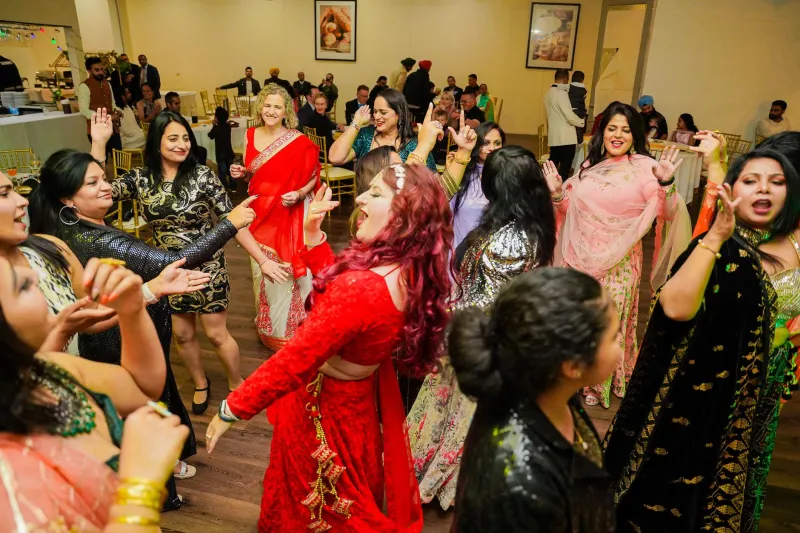
- Sangeet: The music and dance night. This is the Super Bowl of pre-wedding events. Think: choreographed group performances, Bollywood remixes at full volume, and someone's uncle absolutely going for it on the dance floor.
- Baraat/Ceremony: The main event. Religious rituals, vows, possibly several hours of Sanskrit or Arabic prayers depending on the tradition.
- Reception: The party. Food, speeches, more dancing, and the moment you've been waiting for since you skipped lunch.
You may be invited to all of these. You may be invited to just one. Either way, knowing what each one is will save you from showing up in cocktail attire to a daytime Mehendi and looking like you got very lost.
The Outfit Situation (This Is Critical)
Let's talk clothes, because this is where people go wrong most consistently.
For non-South Asian guests: Please, please wear color. Black is technically fine but feels a little funeral-adjacent at a desi celebration. Jewel tones — emerald, royal blue, burgundy, mustard — are your friends. If you want to wear a salwar kameez or a saree, that is absolutely welcome and will genuinely delight the aunties. Just maybe don't wear red if you're not the bride, and avoid white, which carries mourning associations in many South Asian cultures.
For diaspora members who think they know: You do not know as much as you think you know. Your lehenga from three years ago might be perfectly fine, or it might now read as dated in a way that one specific cousin will clock immediately. Check the invite for any color themes (yes, sometimes there are color themes for guests). When in doubt, add more jewelry.
Universal rule: Wear comfortable shoes or bring a pair. You will be removing your footwear at some point — possibly multiple times — and you will absolutely be dancing. Plan accordingly.
Sangeet: Where Reputations Are Made and Destroyed
The Sangeet deserves its own section because it is genuinely the most chaotic and wonderful event in the desi wedding universe.
Here's what you need to know: there will be performances. Family members and friends will have spent weeks — sometimes months — rehearsing elaborate Bollywood medleys to perform in front of everyone. This is not optional participation. If you are close enough to the couple, you may be recruited into one of these numbers whether you like it or not.
If you're drafted into a performance: Just commit. Fully. There is no dignity in half-hearted Sangeet dancing. Go all in and you will be beloved. Hold back and you will be the cautionary tale people reference for years.
If you're in the audience: Cheer loudly, film enthusiastically, and never, ever check your phone during a performance. Someone's grandmother learned a Badshah hook step for this. Show some respect.
Also: eat before you go if dinner is listed as "to follow," because in desi time, that could mean 10:30pm.
Mehendi Etiquette: Don't Touch the Bride
The Mehendi ceremony is genuinely beautiful — an artist applies intricate henna designs to the bride's hands and feet while guests socialize, eat snacks, and often get their own small henna designs done.
A few rules:
- Don't rush the henna artist. They are working. They know what they're doing. Your impatience is not helpful.
- If you get henna done, let it dry completely before touching anything. This seems obvious. You will forget. You will ruin it.
- The deeper the color of the bride's henna when it dries, the more her mother-in-law will love her — according to tradition. Don't ask us, we don't make the rules.
- There will be food. Eat it. It's almost certainly delicious.
The Aunties: A Field Guide
No desi wedding survival guide would be complete without addressing the aunties. They are a force of nature. They are everywhere. They know everything about you, including things you haven't told anyone.
They will ask about your job, your relationship status, your weight (yes, in both directions), and your parents' health in rapid succession. This is not rudeness — it's a form of engagement, a signal that you are seen and that you matter to the community.
The correct response to any auntie question is a smile, a brief answer, and an immediate pivot to asking about her children. This technique has a 94% success rate.
Food: The Actual Point of Everything
Let's be real. The food at a desi wedding is often the most extraordinary spread you will encounter in any given year. Biryani stations. Chaat counters. Mithai towers. The sheer volume and variety of food at a South Asian wedding reception is genuinely staggering.
Tips:
- Use a plate. A real plate. Don't try to balance seventeen things in your hands.
- Pace yourself. There are multiple courses and you will regret loading up on appetizers.
- Ask before you eat if you have dietary restrictions. Many dishes contain ghee, meat, or nuts that aren't immediately obvious.
- Compliment the food to anyone who looks like they might be related to the family. It will make their entire night.
Final Thoughts: Just Show Up With Your Whole Heart
Here's the thing about desi weddings that no guide can fully capture: they are overwhelming and loud and long and occasionally stressful — and they are also genuinely one of the most joyful human experiences you can be part of.
The rituals mean something. The music is incredible. The food is transcendent. And somewhere in the middle of a Sangeet performance or a ceremony moment, you'll feel the weight of generations of culture, love, and community in the room — and it'll hit you right in the chest.
So hydrate, wear comfortable shoes, bring cash for the gift envelope, and get ready to dance.
Shaadi season waits for no one.